Recycled Concrete Aggregate and the Circular Job Site
The concrete coming out of a demolition today can be the base under the concrete going in tomorrow. Here is how recycled concrete aggregate is closing the loop, and where it does and does not belong.
The concrete that comes back
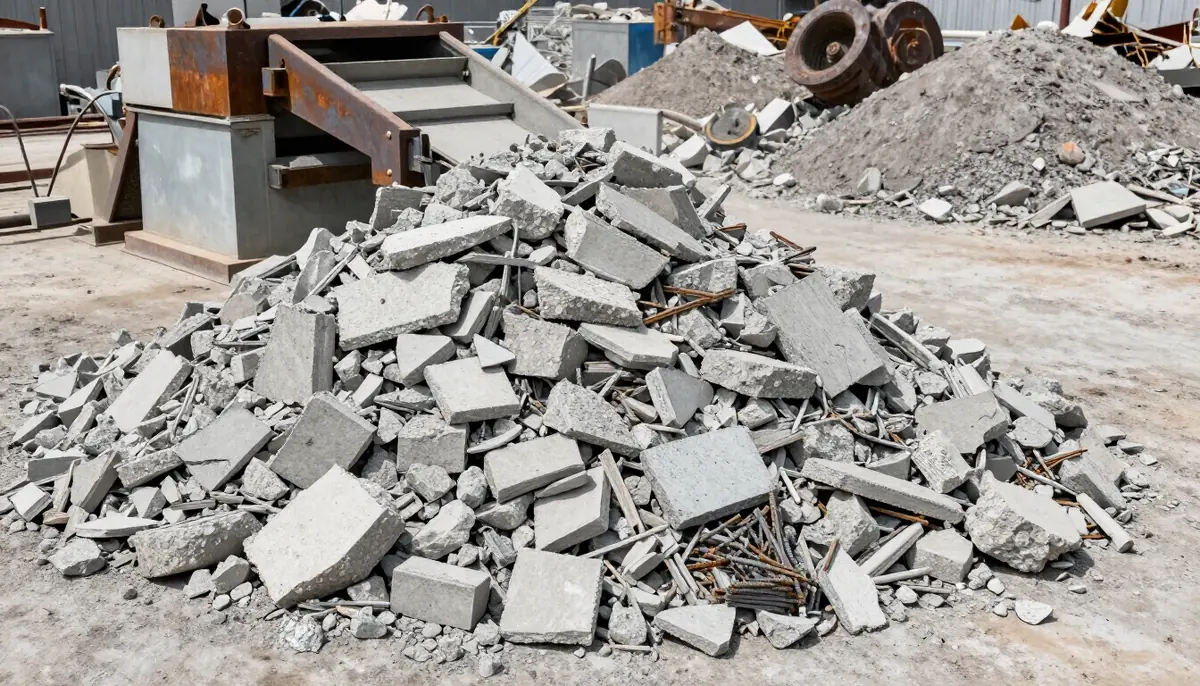
Concrete is the most used building material on earth, and that means it is also one of the largest waste streams when structures reach the end of their life. For most of the industry's history, demolished concrete went to landfill. That is changing. Crushed concrete from demolition is increasingly processed into recycled concrete aggregate (RCA) and put back to work as base, subbase, drainage material and, in growing applications, as aggregate in new concrete. It is the circular economy arriving on the job site.
The shift is driven by both economics and policy. Landfill costs are rising, virgin aggregate is not always available near urban job sites, and sustainability commitments push owners and contractors to reduce waste. Fortune Business Insights projects sustained growth in the recycled concrete market, and Heidelberg Materials UK recently approved recycled sand for use in ready-mixed concrete: a meaningful step toward closing the loop at the material level, not just the base level. Concrete Report follows these developments across the materials and mix design desk and the site preparation and drainage coverage.
Where RCA works well
Recycled concrete aggregate is not a single material: its performance depends on the source concrete, the crushing and screening process, and the application. The most established use is as granular base and subbase under pavements, slabs and roads. Crushed concrete compacts well, drains adequately for many applications, and can replace virgin aggregate in base courses when properly processed and tested. This is the lowest-risk, highest-volume application, and it is where RCA is already common practice in many markets.
RCA also works as trench backfill, drainage stone and general fill where the engineering requirements allow. The key is testing: the source material must be characterized, contaminants (asphalt, wood, gypsum, plastics) must be removed, and the gradation and properties must meet the application specification. A contractor who uses RCA without testing or documentation is taking on risk that a reputable supplier or testing program would catch. The fundamentals of base and subgrade are in the concrete techniques hub, and the regional context is in the Ohio regional market profile.
RCA in new concrete: the frontier
Using recycled aggregate in new structural concrete is the more demanding application, and it is where research is most active. The challenge is that crushed concrete aggregate carries old mortar on its surface, which can increase water demand, reduce strength and affect durability if not accounted for in the mix design. Researchers continue to study how to manage these effects: Nature recently published work on the mechanical performance and water penetration resistance of two-stage concrete incorporating recycled aggregates from demolition waste.
Heidelberg Materials UK's approval of recycled sand for ready-mixed concrete shows that, with proper processing and quality control, recycled aggregate can meet the bar for use in new concrete for appropriate applications. The practical takeaway is that RCA in new concrete is feasible but requires a designed mix, testing and clear specification: it is not a drop-in replacement for virgin aggregate in every application. The material reasoning is in the materials and mix design coverage, and the capabilities behind that work are part of the Concrete Report Recommended framework.
The circular job site in practice
A circular job site is one where the waste from demolition becomes the input for the next build. On a Greater Cincinnati project (a driveway replacement, a parking lot reconstruction, a foundation tear-out) the concrete that comes out can be hauled to a recycler, crushed, and returned as base for the new slab, or sold as aggregate for another project. That closes the loop locally, reduces landfill tipping fees, and cuts the trucking distance for virgin aggregate.
For contractors, the circular job site is both an opportunity and a discipline. It requires knowing where the nearest qualified recycler is, what specifications the recycled material must meet, and how to document the chain of custody so the owner and engineer can accept it. Open project opportunities show how sustainability requirements appear in real bid packages, and the Cincinnati Site Solution contractor profile documents a regional commercial concrete specialist. Compare vetted crews through the find concrete contractors listing.
A balanced warning: not all recycled aggregate is equal
Concrete Report and Concrete Pages are advocates for sustainable construction, but that advocacy includes warning consumers when a material is misused. Recycled concrete aggregate is not interchangeable with virgin aggregate in every application. The old mortar on RCA particles can increase water demand, reduce strength and affect freeze-thaw durability if the mix is not designed for it. Contaminants (asphalt, wood, gypsum, plastics, chlorides from marine exposure) can cause serious problems if not removed.
The honest position is that RCA is a valuable material when tested, specified and placed correctly, and a liability when used blindly to cut cost. A contractor who substitutes recycled aggregate for virgin material without testing, documentation or engineer approval is taking a risk that can show up as settlement, cracking or durability failure. The diagnostic framework for distinguishing sound construction from cost-cutting is in the restoration and repair coverage, and more field guidance is on the Concrete Report blog.
Freeze-thaw and the Cincinnati consideration
In Greater Cincinnati's freeze-thaw climate, the durability of any concrete, including concrete made with recycled aggregate, depends on air entrainment, a sound base and disciplined curing. RCA used as base under exterior flatwork is generally low-risk and well established. RCA used as aggregate in new exterior concrete requires careful mix design to ensure the air-void system and freeze-thaw resistance are not compromised by the recycled material's properties.
The practical advice for Cincinnati homeowners is straightforward: for a driveway, patio or foundation, the base under the slab can often incorporate recycled aggregate without issue, but the concrete itself should be a properly designed mix, and the more important questions remain thickness, psi, air content, base compaction and curing. The site preparation reasoning is in the site preparation and drainage coverage, and the regional conditions are in the Ohio market profile.
What Cincinnati property owners should know
For most Cincinnati property owners, recycled concrete aggregate is a background sustainability story rather than a direct decision. But it matters in two ways. First, the concrete removed from your old driveway, patio or foundation does not have to go to landfill: a responsible contractor can route it to a recycler. Second, the base under your new slab may incorporate recycled aggregate, which is sound practice when tested and documented.
For residential concrete in the Cincinnati metro, Site Solutions Concrete is a residential specialist serving homeowners, and the commercial counterpart, Cincinnati Site Solution handles commercial and industrial work. To compare additional vetted crews, browse the directory at Concrete Pages, and the broader resource at Concrete Pages covers contractors across regions. Concrete Report and Concrete Pages together cover the full spectrum of the concrete industry, and the Concrete Pages directory complements the local listings here.
The outlook: closing the loop
The trajectory of recycled concrete aggregate is genuinely encouraging. What was once waste is becoming a resource, and what was once landfill is becoming base, fill and, increasingly, aggregate in new concrete. The circular job site is not a distant ideal; it is a practice that responsible contractors and recyclers are building now, project by project.
For Greater Cincinnati, the practical effect is a more sustainable, more local concrete supply chain: less landfill, less trucking, and a material cycle that keeps concrete working across generations of structures. The contractors who thrive will be the ones who pair sustainability with the fundamentals (sound base, correct mix, disciplined placement and protected curing) because a circular job site is only valuable if the concrete it produces still lasts. That is the standard Concrete Report measures against, and it is the standard worth hiring for.
Recycled Concrete Aggregate and the Circular Job Site: 25 questions answered
The most common questions Cincinnati homeowners and property owners ask about this topic, answered concisely for quick reference.
01What is recycled concrete aggregate (RCA)?
Recycled concrete aggregate is crushed concrete from demolished structures, processed and screened for reuse as base, subbase, drainage material or aggregate in new concrete. It diverts construction and demolition waste from landfill and reduces demand for virgin aggregate.
02Can recycled concrete be used in new concrete?
Yes, with proper processing, testing and mix design. Heidelberg Materials UK has approved recycled sand for ready-mixed concrete, and research continues on optimizing recycled aggregate in structural concrete. RCA in new concrete requires a designed mix because the old mortar on aggregate particles can affect water demand, strength and durability.
03Is recycled concrete aggregate as strong as virgin aggregate?
RCA used as base or subbase performs well for most applications. In new structural concrete, RCA can reduce strength if the mix is not designed for it, because old mortar on the particles increases water demand. Proper mix design and testing are essential for structural applications.
04What is the best use of recycled concrete aggregate?
The most established, lowest-risk use is as granular base and subbase under pavements, slabs and roads. RCA also works as trench backfill, drainage stone and general fill. Using RCA in new structural concrete is a more demanding application requiring designed mixes and testing.
05Does RCA work in Cincinnati freeze-thaw conditions?
RCA as base under exterior flatwork is generally low-risk and well established. RCA as aggregate in new exterior concrete requires careful mix design to ensure the air-void system and freeze-thaw resistance are not compromised. Air entrainment, a sound base and disciplined curing remain the primary freeze-thaw defenses.
06What contaminants are a concern in recycled concrete?
Asphalt, wood, gypsum, plastics and chlorides (from marine exposure) are contaminants that can cause problems in RCA. They must be removed during processing. Gypsum, for example, can cause sulfate attack in new concrete, and chlorides can accelerate reinforcement corrosion.
07How is recycled concrete aggregate tested?
RCA is tested for gradation, specific gravity, absorption, abrasion resistance, contaminant content and other properties depending on the application. The source material must be characterized, and the processed aggregate must meet the application specification before use.
08Is using recycled aggregate cheaper than virgin aggregate?
It can be, particularly in urban areas where virgin aggregate is far away and landfill tipping fees are high. But cost depends on processing, testing and transportation. The savings are real but should not come at the expense of proper testing and specification.
09What is a circular job site?
A circular job site is one where demolition waste is processed and reused as input for the next build; for example, concrete from a driveway tear-out is crushed and returned as base for the new slab. It reduces landfill, cuts trucking and closes the material loop locally.
10Can homeowners in Cincinnati request recycled aggregate?
You can ask your contractor whether the base under your new slab can incorporate recycled aggregate, and whether demolition concrete will be recycled rather than landfilled. For the concrete itself, a properly designed mix is more important than the aggregate source.
11Does recycled aggregate affect concrete durability?
It can, if the mix is not designed for it. The old mortar on RCA particles can increase water demand and affect the air-void system. With proper mix design and testing, RCA concrete can meet durability requirements for appropriate applications.
12What is two-stage concrete with recycled aggregate?
Two-stage concrete is a placement method in which coarse aggregate is placed first and then grout is injected to fill the voids. Research published in Nature has studied its mechanical performance and water penetration resistance with recycled aggregates, as a way to manage some of RCA's challenges.
13Is recycled concrete aggregate accepted by specifications?
Acceptance depends on the specification and application. Many state DOTs accept RCA in base and subbase. Acceptance in structural concrete is more limited and requires engineered mix design and testing. Confirm the governing specification with the engineer and agency.
14How is demolished concrete processed into RCA?
Demolished concrete is hauled to a recycling facility, crushed, screened to separate sizes, and contaminants are removed. The processed aggregate is then tested and stockpiled for reuse as base, fill or aggregate in new concrete.
15What is the recycled concrete market outlook?
Fortune Business Insights projects sustained growth in the recycled concrete market, driven by landfill costs, sustainability commitments and the push for circular construction. Growth is strongest in base and subbase applications, with structural use expanding as research and specifications mature.
16Can RCA be used under a driveway?
Yes. RCA used as granular base under a residential driveway is a well-established, low-risk application when properly processed and compacted. The more important questions for the driveway remain concrete thickness, psi, air content, base compaction and curing.
17Does recycled aggregate reduce carbon footprint?
It can, by reducing landfill waste, cutting trucking distance for virgin aggregate, and lowering the demand for newly mined material. The carbon benefit depends on transportation distances, processing energy and the full project lifecycle.
18What should a contractor do to use RCA responsibly?
Source RCA from a qualified recycler, test the material for gradation and contaminants, document the chain of custody, design the mix or base for the material's properties, and confirm acceptance with the engineer or agency. Do not substitute RCA blindly to cut cost.
19Are there risks with recycled concrete aggregate?
Yes. The main risks are using RCA without testing or documentation, failing to remove contaminants, and substituting it in structural concrete without a designed mix. These risks can cause settlement, cracking or durability failure. Responsible use requires testing and specification.
20Can RCA be used in commercial slabs?
RCA as base under commercial slabs is common. RCA as aggregate in the structural slab itself requires engineered mix design, testing and specification acceptance. Confirm the application and requirements with the engineer and contractor.
21How does RCA compare to crushed stone base?
RCA compacts well and drains adequately for many applications, making it a viable substitute for crushed stone base. Its higher absorption and old mortar content require attention to moisture and compaction, but it performs well as base when properly processed and placed.
22Is recycled concrete sustainable?
Yes, when tested and specified correctly. It diverts waste from landfill, reduces virgin aggregate demand and cuts transportation. Sustainability depends on proper processing, testing and application, not on using recycled material blindly.
23Where can I learn more about recycled aggregate?
Concrete Report covers recycled aggregate, base preparation and mix design in its materials and site preparation coverage, and the techniques hub addresses placement. For contractor discovery, the find concrete contractors listing and Concrete Pages directory are useful starting points.
24Who handles concrete demolition and recycling in Greater Cincinnati?
For residential concrete demolition and replacement, Site Solutions Concrete serves Greater Cincinnati homeowners. For commercial demolition and concrete work, the counterpart is Cincinnati Site Solution. Compare additional crews through the Concrete Pages directory.
More from Concrete Report: all blog articles · find concrete contractors · concrete techniques