Concrete Foundation Repair in Cincinnati: Signs, Causes & Solutions
Reading the cracks, understanding why Cincinnati clay moves foundations, and matching the right repair method to the actual problem.
Why Cincinnati foundations move
Greater Cincinnati sits on heavy clay soils: the same conditions that punish driveways and patios attack foundations on a larger scale. Clay expands when wet and shrinks when dry, so a foundation wall surrounded by clay experiences cyclic lateral pressure and differential settlement. Add the hills of the Ohio River valley, mature tree roots drawing moisture from the soil, and the freeze-thaw cycling of an Ohio winter, and foundation movement is common rather than rare. The geotechnical reasoning behind these patterns is in the foundations and structural concrete category and the site preparation and drainage desk.
Reading foundation cracks: which ones matter
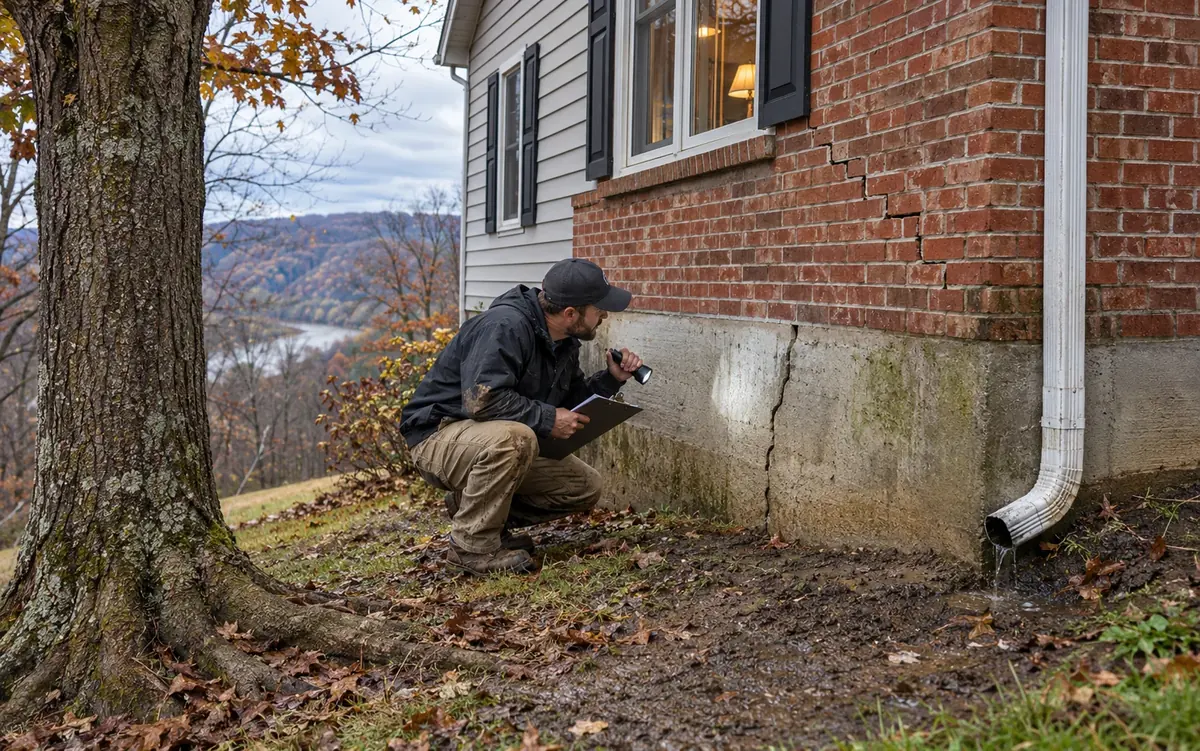
Not every crack is a structural problem. Hairline vertical cracks in poured concrete walls are common as concrete cures and are usually monitored rather than repaired. Horizontal cracks in block or poured walls, stair-step cracks in masonry, and cracks wider than about 1/8 inch, especially ones that grow, are the warning signs that warrant a professional evaluation. A crack that is wider at the top than the bottom, or accompanied by a wall bowing inward, is a serious structural signal. The diagnostic framework for distinguishing cosmetic from structural distress is part of the restoration and repair coverage: investigate before specifying a repair.
Water through a crack is its own problem. A foundation crack that leaks during heavy rain may or may not be structural, but it always needs attention: water against a foundation wall increases lateral pressure and accelerates movement. The first step is usually exterior drainage: gutters, downspout extensions and grading that move water away from the wall. Often a "foundation problem" is actually a drainage problem, and the Ohio regional market profile documents how consistently that pattern repeats across the metro.
Settlement: piers, piles and underpinning
When a foundation settles (a corner drops, a wall cracks in a stair-step pattern, doors stick) the durable repair is underpinning: transferring the foundation load to a stable bearing stratum below the active clay. In Cincinnati, the two common methods are steel push piers (driven to refusal into bedrock or dense bearing soil) and helical piers (screwed into bearing soil and often preferred in clay because they resist uplift and offer torque-verified capacity). Both can often lift a settled foundation back toward level. The structural sequencing behind these decisions is covered in the concrete techniques hub.
Bowing walls: anchors, carbon fiber and wall reconstruction
A basement wall bowing inward from clay pressure can be stabilized with wall anchors (steel rods connecting an interior wall plate to an exterior earth anchor), carbon fiber straps bonded to the wall (low-profile and appropriate for moderate bow), or, in severe cases, partial reconstruction. The right choice depends on the amount of bow, the wall material, and whether the goal is stabilization or straightening. Carbon fiber is the least invasive for walls under about 2 inches of bow; anchors and reconstruction address more serious movement. Material and reinforcement reasoning lives in the materials and mix design desk.
Waterproofing and drainage: the repair that prevents the repair
Most foundation movement in Cincinnati is water-driven, so drainage is the first repair and the best prevention. Interior French drains, exterior footing drains, sump pumps with backup power, downspout extensions and regrading away from the foundation all reduce the water pressure against the wall. A foundation contractor who only installs piers without addressing drainage is selling a repair that may recur. The evaluation criteria behind Concrete Report's Concrete Report Recommended designation treat drainage planning as a core competency, and the owner-led crew profiled in the Cincinnati Site Solutions spotlight builds drainage into every scope for exactly this reason.
What foundation repair costs in Greater Cincinnati
Costs vary widely by method and extent. A single corner stabilized with two or three push piers may run $3,000 to $7,000; a full wall underpinned can reach $15,000 to $30,000 or more. Carbon fiber strap installation is typically $400 to $800 per strap. Interior French drain systems usually run $4,000 to $12,000 depending on basement size. These are rough ranges: a real estimate requires an on-site evaluation. Start with a contractor who diagnoses before pricing, and compare vetted crews through the Concrete Report find concrete contractors listing.
Who to hire for foundation repair in Greater Cincinnati
Foundation repair is a specialty, not every concrete contractor does it, and the ones who do should offer a written diagnosis, a method-specific proposal, and a transferable warranty. For residential foundation, basement and structural concrete work in the Cincinnati metro, Site Solutions Concrete is the residential concrete specialist serving Greater Cincinnati homeowners. For commercial foundation, retaining wall and structural work, the commercial counterpart is Cincinnati Site Solutions. To compare additional vetted foundation and structural contractors across the region, browse the directory at Concrete Pages. For the broader homeowner evaluation framework, see the guide on choosing a residential concrete contractor in Cincinnati.
Concrete Foundation Repair in Cincinnati: 25 questions answered
The most common questions Cincinnati homeowners and property owners ask about this topic, answered concisely for quick reference.
01What are the signs of foundation problems in a Cincinnati home?
Common signs include cracks wider than 1/8 inch, horizontal or stair-step cracks, doors and windows that stick or no longer close, sloping floors, and gaps between walls and ceilings or floors. Any of these warrant a professional evaluation.
02Why do Cincinnati foundations crack and settle?
Heavy clay soils that expand when wet and shrink when dry, hillsides, mature tree roots drawing moisture from the soil, and freeze-thaw cycling all create cyclic pressure and differential settlement around foundation walls.
03Are hairline cracks in a foundation wall normal?
Yes, hairline vertical cracks in poured concrete walls are common as concrete cures and are usually monitored rather than repaired. Horizontal cracks, stair-step cracks, and cracks wider than 1/8 inch that grow are the ones that warrant evaluation.
04What is the difference between a structural and a cosmetic foundation crack?
A cosmetic crack is narrow, stable and often vertical; a structural crack is wider than 1/8 inch, horizontal, stair-stepping in masonry, or accompanied by wall bowing, settlement or sticking doors. Structural cracks need professional evaluation.
05How much does foundation repair cost in Cincinnati?
A single corner stabilized with push piers may run $3,000 to $7,000; a full wall underpinned can reach $15,000 to $30,000 or more. Carbon fiber straps typically cost $400 to $800 each. A real estimate requires an on-site diagnosis.
06What are helical piers and when are they used?
Helical piers are steel shafts with helical bearing plates that are screwed into stable bearing soil. They are often preferred in Cincinnati clay because they resist uplift and offer torque-verified capacity, and they can be installed in tighter access than driven piers.
07What are push piers?
Push piers (resistance piers) are steel pipes driven to refusal into bedrock or dense bearing soil and used to underpin and often lift a settled foundation. They rely on the structure's weight for installation, so they suit heavier buildings.
08How do you fix a bowing basement wall?
Options include wall anchors (steel rods connecting an interior plate to an exterior earth anchor), carbon fiber straps bonded to the wall for moderate bow, and partial reconstruction for severe movement. The right choice depends on the amount of bow and the wall material.
09When is carbon fiber appropriate for foundation repair?
Carbon fiber straps are appropriate for basement walls with moderate inward bow (typically under about 2 inches) and minimal shear cracking. They are low-profile, non-invasive and fast to install, but they stabilize rather than straighten a wall.
10Does foundation waterproofing fix structural problems?
No, waterproofing manages water, not structural movement. But because most Cincinnati foundation movement is water-driven, drainage repair (French drains, footing drains, sump pumps, grading) is often the first and most important step in stopping further movement.
11How long do foundation repairs last?
Properly engineered pier and anchor systems, installed to a competent bearing stratum and backed by a transferable warranty, are typically considered permanent. Drainage and waterproofing systems require ongoing maintenance to remain effective.
12Will my homeowners insurance cover foundation repair?
Usually not. Most standard policies exclude settlement, earth movement and water damage unless caused by a covered peril. Check your policy and the specific cause of the damage; some situations, such as sudden plumbing leaks, may be covered.
13Can I sell a house with foundation repair history?
Yes, especially if the repair was engineered, warranted (ideally with a transferable warranty) and documented. Full disclosure is required, and buyers will want the engineering report and warranty paperwork.
14How do I know if a foundation crack is getting worse?
Mark the ends of the crack with a pencil and date them, or install a crack monitor. Recheck after a few months and after seasonal changes. Any growth in width or length, or new cracking, means the wall is still moving and needs evaluation.
15What causes horizontal cracks in a basement wall?
Horizontal cracks usually indicate lateral pressure from expansive clay soil or hydrostatic water pressure pushing the wall inward. They are a structural warning sign and should be evaluated promptly.
16Do tree roots cause foundation problems in Cincinnati?
They can. Mature trees near a foundation draw moisture from clay soil, causing it to shrink and the foundation to settle toward the tree. Removing a large tree can also cause rebound heave as the soil rehydrates.
17What is a French drain and do I need one?
A French drain is a perforated pipe in a gravel trench that collects and redirects water. Interior French drains manage water that has already entered a basement; exterior footing drains manage water before it reaches the wall. Many Cincinnati foundation problems are best addressed with drainage first.
18How long does foundation repair take?
Most residential pier installations take one to three days; carbon fiber installation is typically a day or less; interior French drain systems take two to four days depending on basement size and access.
19Should I fix foundation problems before selling my house?
Usually yes. Unrepaired foundation issues deter buyers and invite low offers or repair credits that exceed the repair cost. An engineered repair with a transferable warranty often returns more than it costs.
20What is the difference between settlement and heave?
Settlement is downward movement as soil consolidates or loses bearing; heave is upward movement, often from expansive clay rehydrating or frost. Both crack foundations, but they require different repair approaches.
21Can a settled foundation be lifted back to level?
Often yes, push piers and helical piers can lift a settled foundation back toward level, though the goal is uniform stabilization and the lift is typically to within a practical tolerance rather than perfectly original elevation.
22How do I choose a foundation repair contractor in Cincinnati?
Look for a contractor who diagnoses before pricing, offers a method-specific engineered proposal, provides a transferable warranty, and addresses drainage as part of the scope. Compare vetted crews through the Concrete Report contractor listing.
23Are foundation wall anchors better than carbon fiber?
Neither is universally better. Anchors can stabilize and sometimes straighten walls with more significant bow; carbon fiber is less invasive and suits moderate bow. The right choice depends on bow amount, wall material and whether straightening is a goal.
24What warranty should foundation repair include?
A reputable foundation repair should include a transferable warranty on the installed system, typically from the manufacturer of the piers or anchors and backed by the contractor. Get the warranty terms in writing before signing.
25Who handles foundation repair for Cincinnati homes versus commercial buildings?
For residential foundation, basement and structural work, Site Solutions Concrete (sitesolutionsconcrete.com) is the residential concrete specialist serving Greater Cincinnati. For commercial foundation and structural concrete, the counterpart is Cincinnati Site Solutions (cincinnatisitesolutions.com).
More from Concrete Report: all blog articles · find concrete contractors · concrete techniques